
Bases
Naturally the base that your shed is positioned on is very important, not only for strength but also for long term stability of your shed. There are 5 main types of bases that we recommend. In this section we go through the different options as well as the pros and cons of each.
Bases need to be solid, secure and level and are essential for correct assembly and to help protect your building in the long term.
In this Section:
- What are Bearers?
- Types of shed bases
- What type of base should I choose?
- Why is the base so important?
- Is a base always required?
- Does my base need to be ready before installation?
What are Bearers?
The bearers we use are 75mm x 75mm pressure treated wooden posts that we lay under a shed floor to raise the shed off the ground. Bearers are a vital part of any shed installation due the huge benefits that add for all base types. The two most important benefits they add are:
Levelling: The bearers allow the installers to use pieces of packing to level the area and ensure that the shed floor is level prior to the installation. It is very rare for a shed base, even concrete and patios, to be level which is important for long term stability of your shed.
Water & Debris: The bearers raise the shed off of the base which helps prevent water, leaves and other debris from coming into direct contact with the floor joists.
Air Flow: By raising the shed off of the base it allows for air to circulate all the way around the shed. By reducing stagnant air pockets around the shed it helps reduce the chances of rot from occurring.
Types of sheds bases
There are 5 main types of bases that we would suggest. Whilst there are other bases available, in our experience these are the bases that work the best.
Concrete Bases
Concrete bases are the best base you can provide for your shed to sit on. The stability and strength that they provide is the very best for your shed to be situated on. Even with concrete bases we still recommend using our Bearers as they raise the floor of the shed off the base to allow for air circulation and to help prevent ingress of water into the floor joists.
Concrete bases should be a minimum of 4″ (100mm) deep to allow for enough strength to be long lasting and stable.
Pros
- Strongest and most stable base
- Best suited for ALL shed sizes and models
- Highly recommended for big sheds & summerhouses due to the huge weight of those buildings
- Stable & very long lasting
Cons
- Expensive
- Most “permanent” option for a base
- Not suitable for a lot of situations (e.g. Allotments)
- Not easy to do DIY
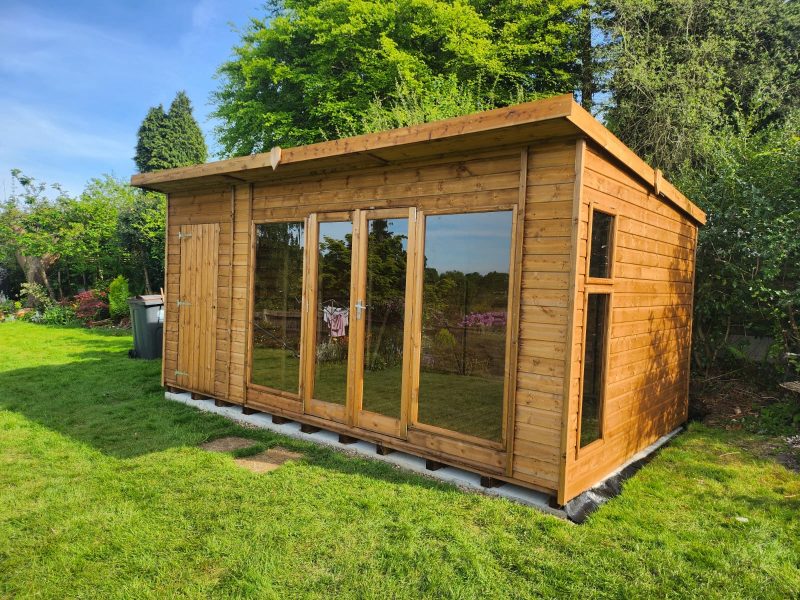
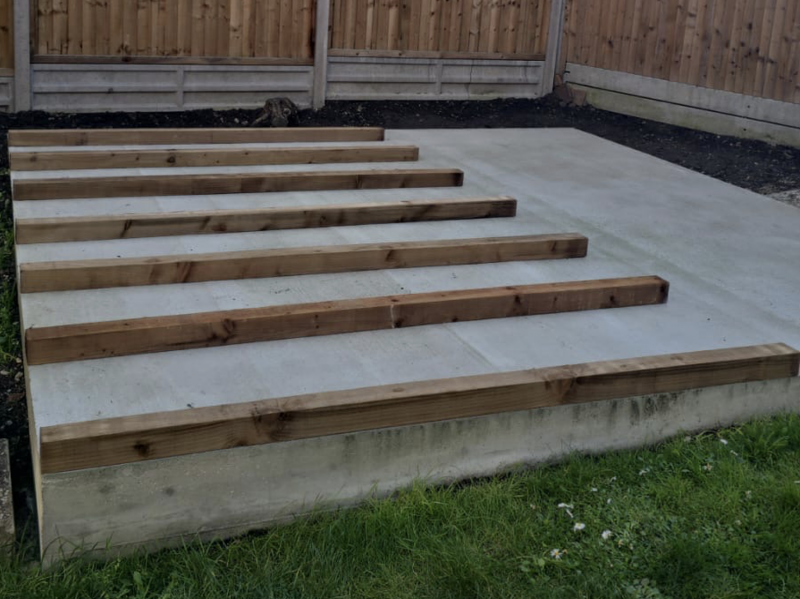
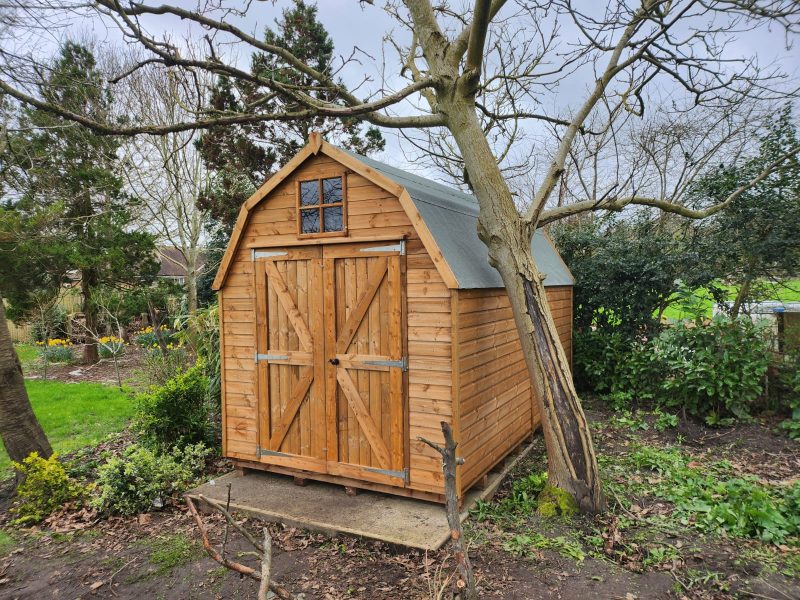
Bearers & Slabs
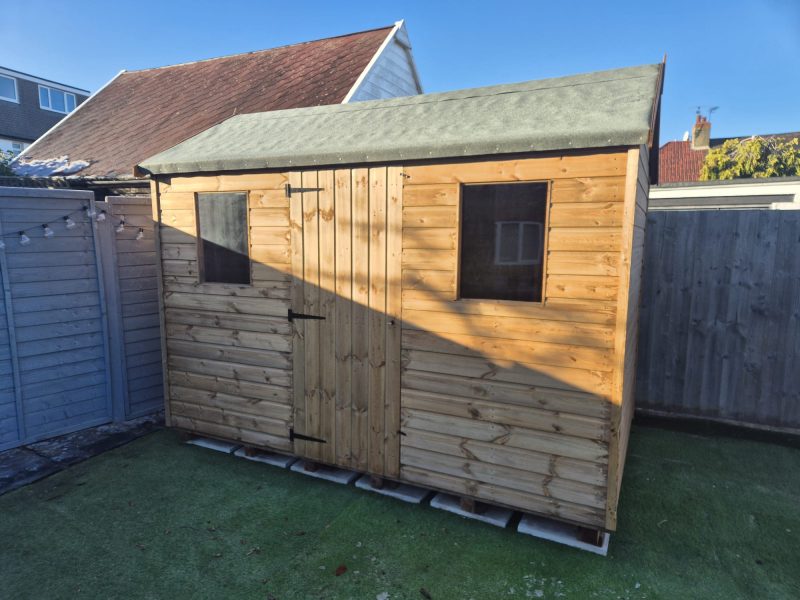
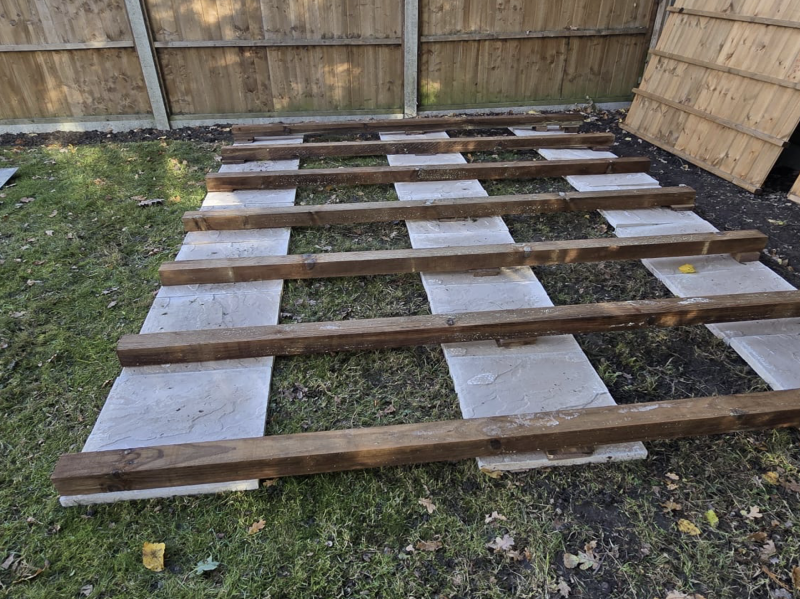
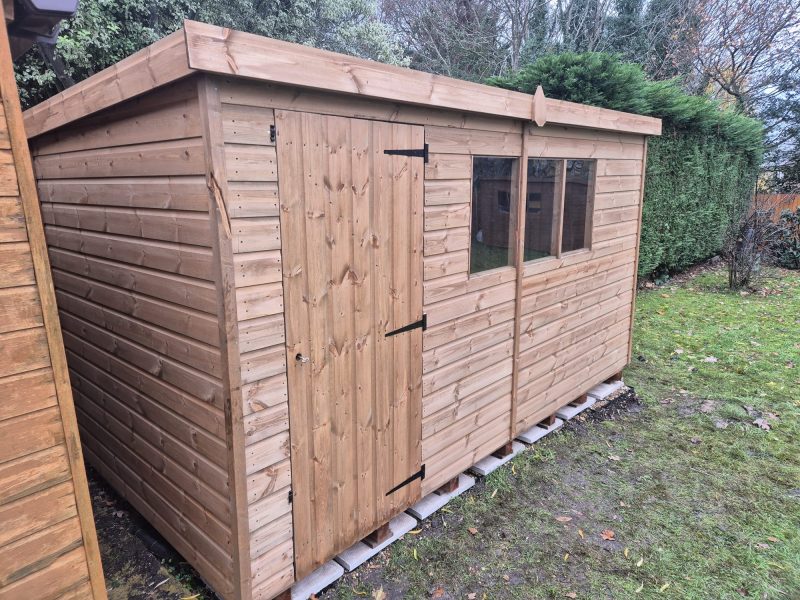
Bearers & Slabs is our speciality base. We lay standard paving slabs on the ground to provide a solid barrier between the ground and the bearers. We then use our pressure treated wooden bearers to go across the slabs and level them using pieces of pressure-treated packing. This creates a grid of strength between the bearers and the floor joists which run in opposite directions to each other.
To allow us to do this type of base for you the area needs to be completely clear of foliage and debris (maintained grass is okay). The area also has to be level to within 4″, meaning that over the whole area the ground cannot be more than 4″ (100mm) out of level.
It is unnecessary for the area to have slabs all over the ground with this base style as we only need them in certain positions to support the bearers.
Pros
- Affordable style of base
- Can be easily done in most gardens
- Perfect for allotments that do not allow “permanent structures” (e.g. concrete bases)
- Suitable for most sheds and summerhouses
- Perfect for small to medium sized sheds
- Works on almost all surfaces (including artificial grass)
Cons
- Not as stable as a concrete base or patio
- Not ideal for large sheds
- Not easy to do DIY
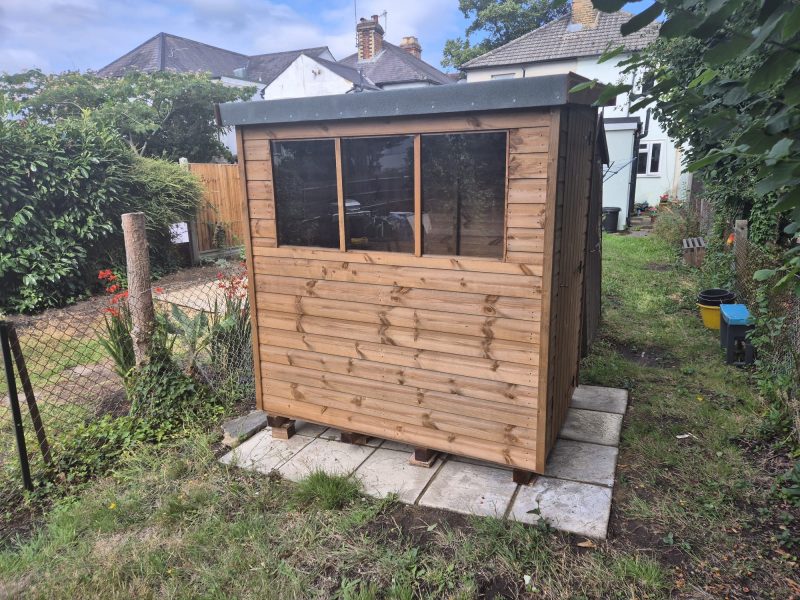
Patio / Paved Area
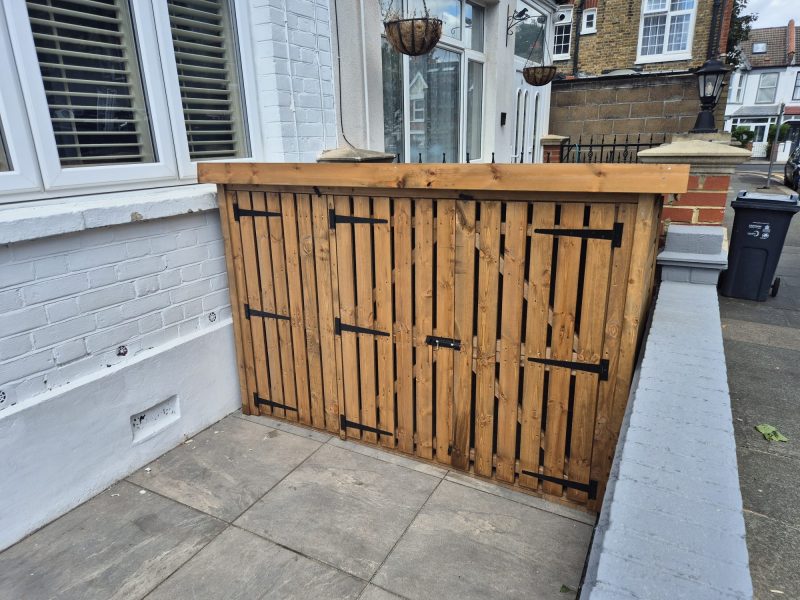
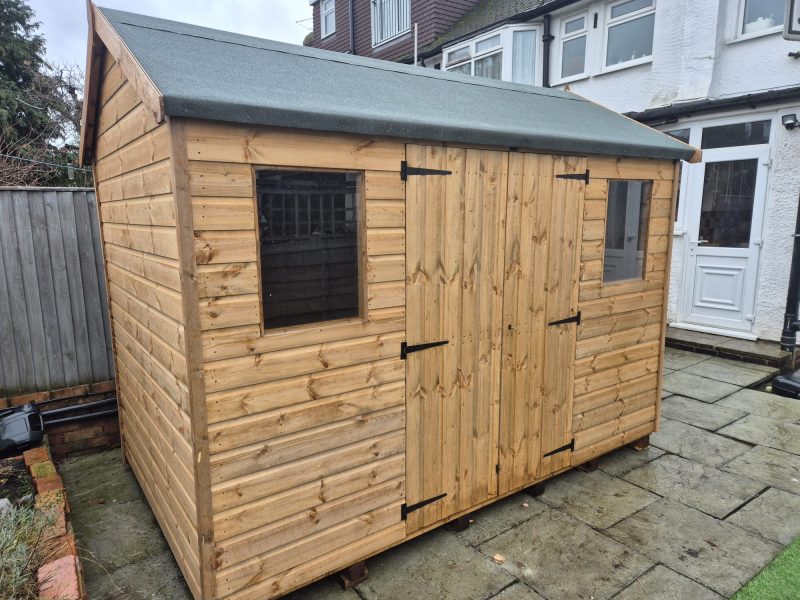
A patio or paved area is a great way of preparing a base for a shed. The paved area should be stable and secure for the best results.
For paved bases you should compact the surface, and bed the slabs onto sand and cement dry mix or gravel.
Pros
- Works well if you are placing your shed on an existing paved area
- Strong and stable
- Suitable for sheds and summerhouses of all sizes
Cons
- Expensive
- As “permanent” as a concrete base
- Not suitable for a lot of situations (e.g. Allotments)
- Not easy to do DIY
Decking
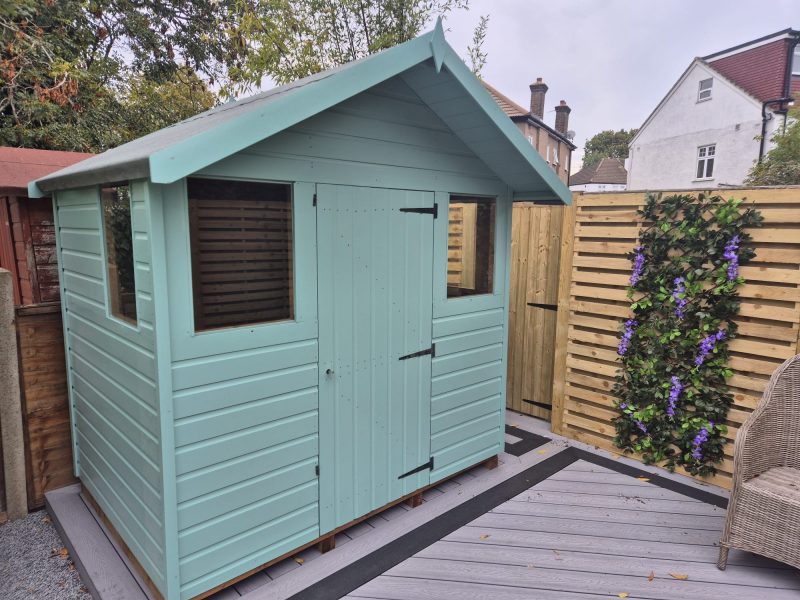
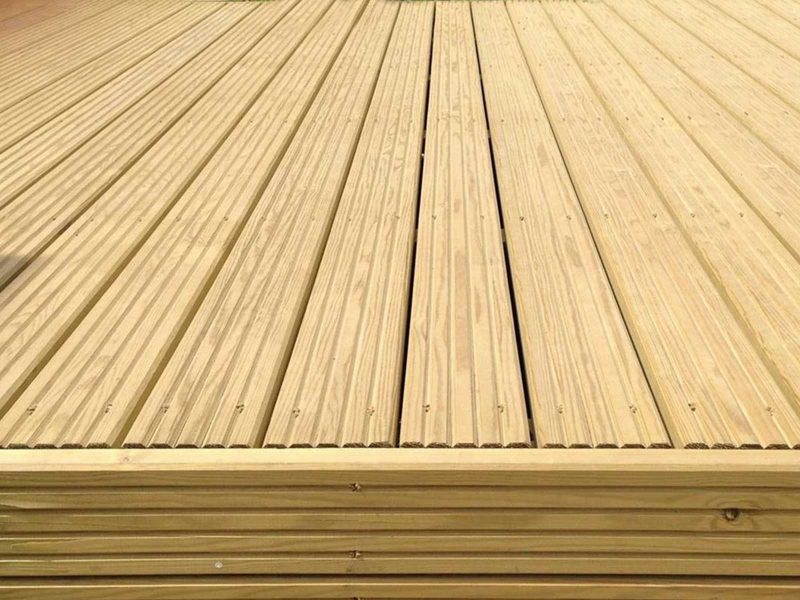
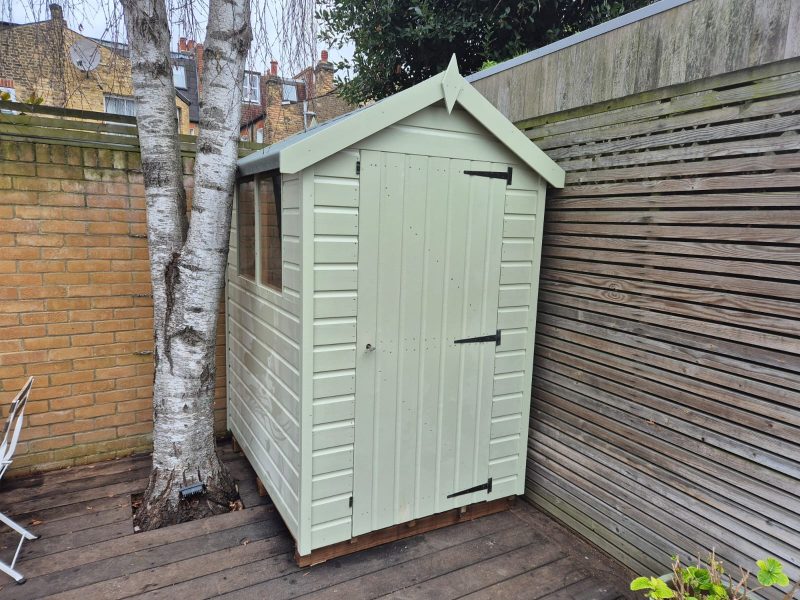
Decking is a great base for a shed. As long as the decking is in good condition with good drainage it is also the one base type where you may not need bearers.
Pros
- Works well if you are placing your shed on existing decking
- Suitable for most sheds and summerhouses
- Ideal for small-medium sized sheds
- Strong and Stable
Cons
- Can be expensive
- Fairly permanent structure
- Can rot which reduces the stability of the overall base
- Not suitable for a lot of situations (e.g. Allotments)
- Not easy to do DIY
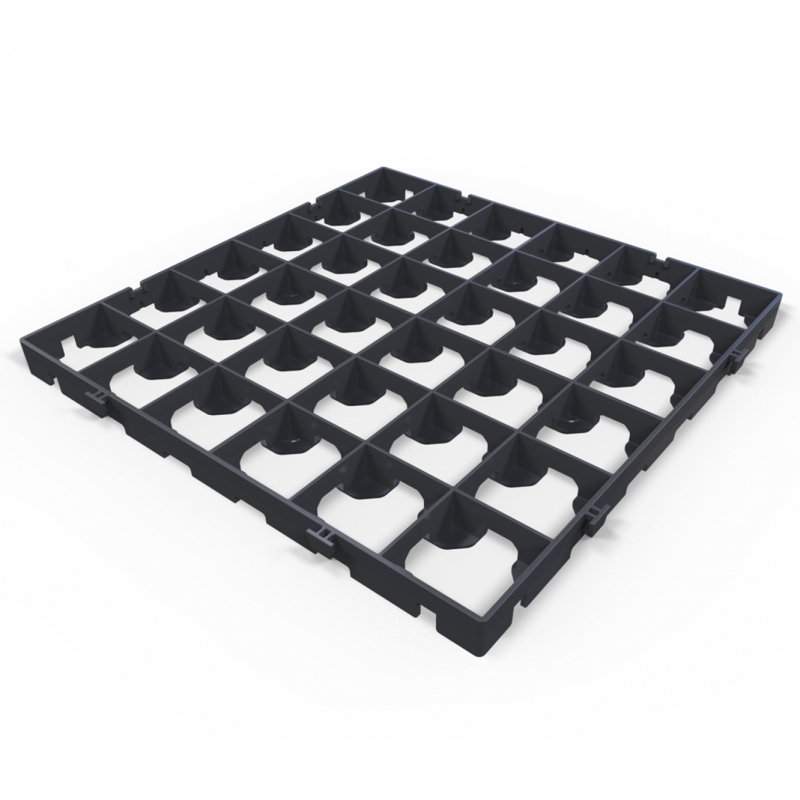
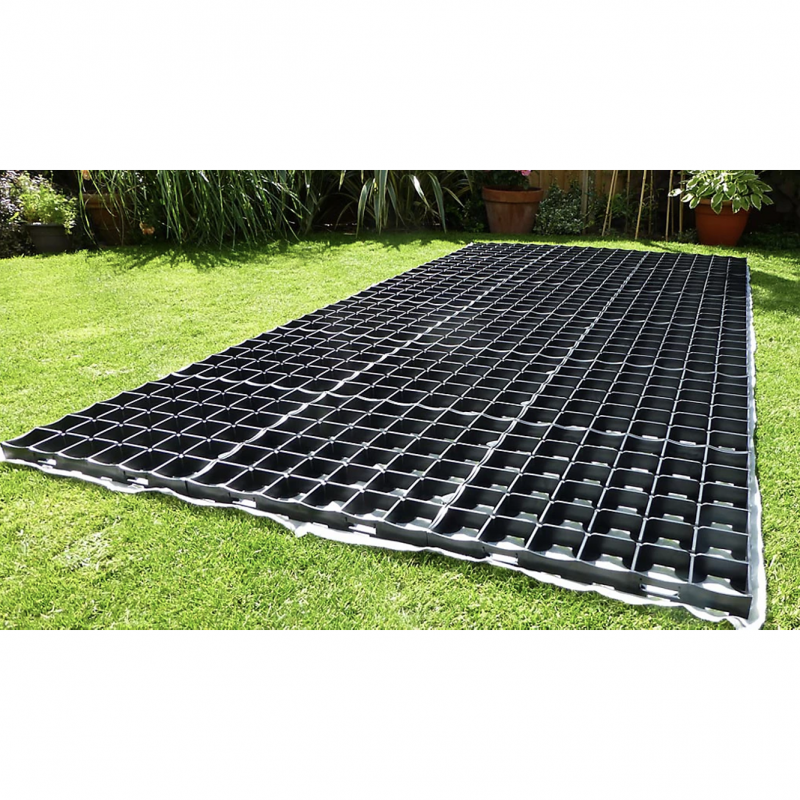
Plastic Grid Base
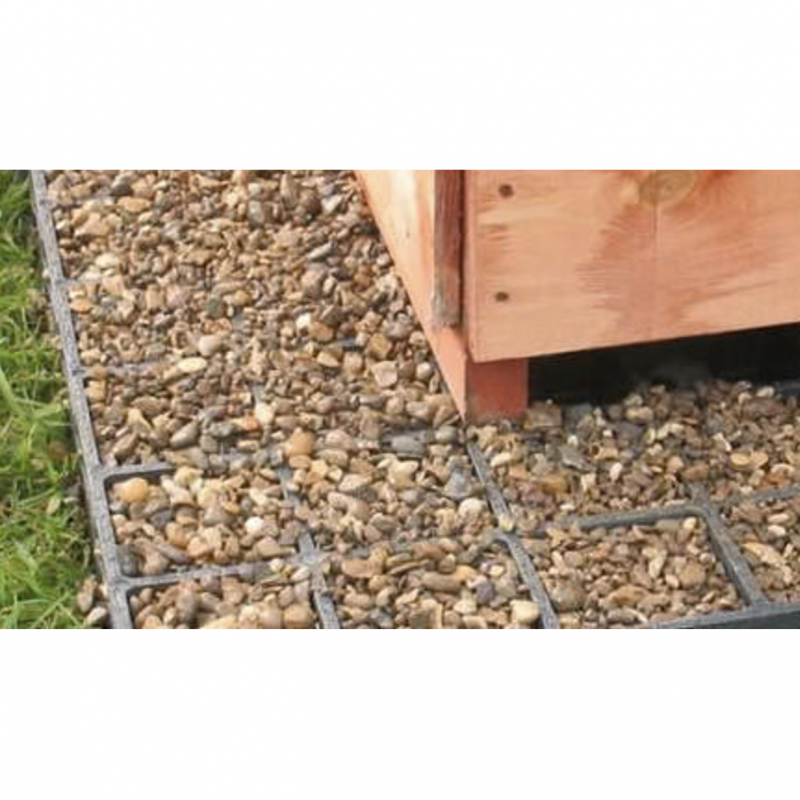
A plastic grid base is the newest addition to this list. These bases are a good option that is cost effective and provides good drainage. Sheds that use plastic grid as a base also may not need use bearers, we still always recommend them but due to the extra drainage these bases provide they are not necessary as long as the grid is perfectly level.
It’s very important when using these bases to not overfill the grid with stones prior to the shed installation. If stones are overflowing from the top of the grid then it can make installation of the shed really difficult as you have to channel out where the bearers will go. After the shed has been installed you can always add extra stones around the edge of the shed for a nicer finish.
It is also highly advised to use small stones/gravel as the filler of the grid as it makes the filling process easier and less likely to have stones sticking up that get in the way of installation.
Pros
- Affordable compared to concrete or patio
- A good option as a DIY base
- Stable with good drainage
- Suitable for small-medium sized sheds
Cons
- Not as stable or long lasting as a concrete base or patio
- Not ideal for large sheds
- Fairly permanent structure
- Not suitable for a lot of situations (e.g. Allotments)
- If overfilled it causes a problem with installation
What type of base should I choose?
The type of base you should choose is very dependent on a few factors
- The size of the shed
- The model of the shed
- The types of bases are you allowed
- For Example: At an allotment)
- The conditions of your garden
- For Example: How water drains from your garden
Why is the base so important?
A properly prepared base provides:
- A stable level area for assembly to be correctly done
- Protection against movement or distortion over time
- A solid foundation to support the weight of the building as well as any contents held within
- Correct alignment of doors and windows
Installing a shed or summerhouse on an uneven or unsuitable base can lead to problems such as doors not closing correctly, gaps forming between panels and difficulty during installation